
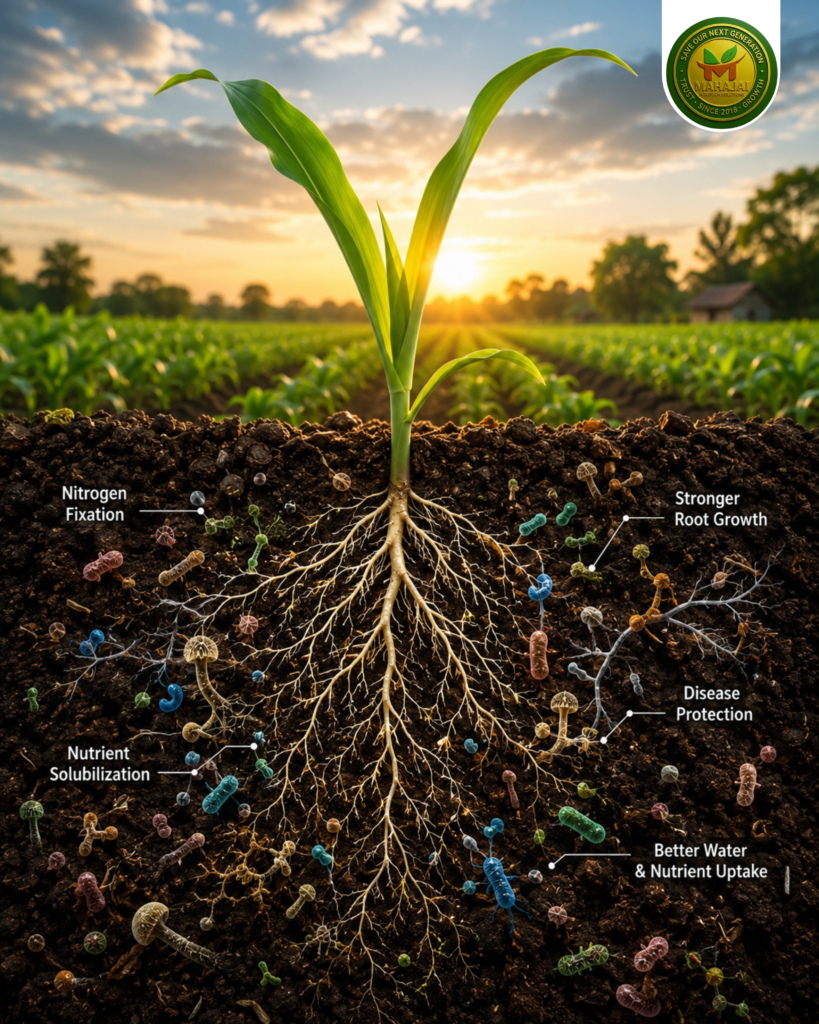
When we think about farming, we usually talk about good seeds, fertilizers, irrigation, and weather. But there is one important factor that often goes unnoticed—the tiny living organisms present in the soil, known as soil microbes.
These beneficial bacteria, fungi, and other microorganisms are the real workers beneath the ground. They help plants absorb nutrients, improve root growth, protect crops from harmful diseases, and maintain soil fertility. In simple words, healthy soil is living soil, and living soil produces healthy crops.
Why Are Soil Microbes Important?
A single handful of healthy soil contains millions of beneficial microorganisms. Although they are too small to be seen with the naked eye, their role in farming is huge.
These microbes naturally break down organic matter such as crop residues and farmyard manure, converting them into nutrients that plants can easily absorb. They also improve soil structure, making it softer and better at holding water and air. This creates the right environment for healthy root growth.
How Soil Microbes Help Crops
Soil microbes support crops in many different ways:
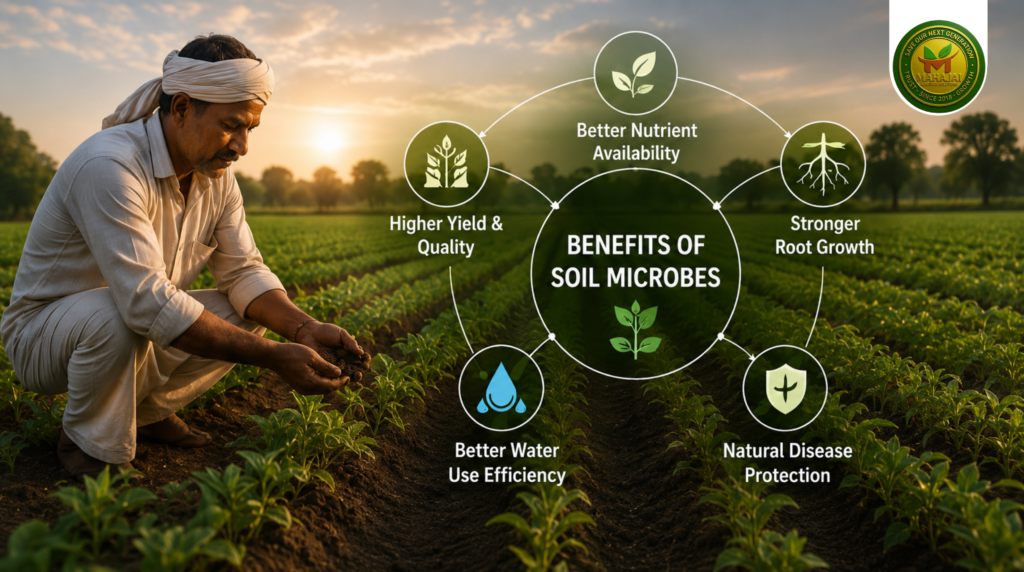
- Improve nutrient availability: Beneficial microbes help release important nutrients like nitrogen, phosphorus, and potassium from the soil, making them available to plants.
- Boost root development: Strong roots absorb more water and nutrients, helping plants grow healthier.
- Increase water-use efficiency: Healthy microbial activity improves soil structure, allowing it to hold moisture for longer periods, which is especially useful during dry spells.
- Protect against diseases: Certain beneficial microbes compete with harmful organisms in the soil and help reduce the risk of soil-borne diseases.
- Reduce crop stress: Active soil biology helps plants tolerate heat, drought, and other environmental stresses more effectively.
The Indian Farming Perspective
Indian agriculture is facing several challenges today. Rising fertilizer costs, unpredictable rainfall, declining organic matter, and continuous cultivation have affected soil health in many regions.
Many farmers focus on adding fertilizers every season but often forget that soil itself needs care. Without healthy microbial life, crops cannot efficiently use the nutrients already present in the soil. This can lead to lower productivity even after spending more on inputs.
Improving soil biology is becoming one of the most practical ways to maintain productivity while supporting long-term soil health.
Simple Ways to Improve Soil Microbial Activity
Farmers can encourage beneficial microbes by following a few simple practices:
- Add organic matter such as compost or well-decomposed farmyard manure.
- Avoid excessive use of chemicals wherever possible.
- Maintain proper soil moisture.
- Reduce unnecessary soil disturbance.
- Use biofertilizers and microbial products when recommended.
- Practice crop rotation and include legumes in the cropping system.
These small changes can gradually improve soil fertility and crop performance over time.
Why Root Health Matters
Healthy roots are the foundation of every healthy crop. Even the best fertilizers cannot give good results if the root system is weak.
Beneficial microbes work closely around the root zone, helping roots absorb nutrients more efficiently. A strong root system also allows plants to withstand stress and produce better-quality crops with improved yields.
Building Healthy Soil with Mahajai Agritech Solutions
At Mahajai Agritech Solutions, we believe that sustainable farming starts from the soil. Our approach is not just about supplying nutrients—it is about improving the natural biological activity of the soil.
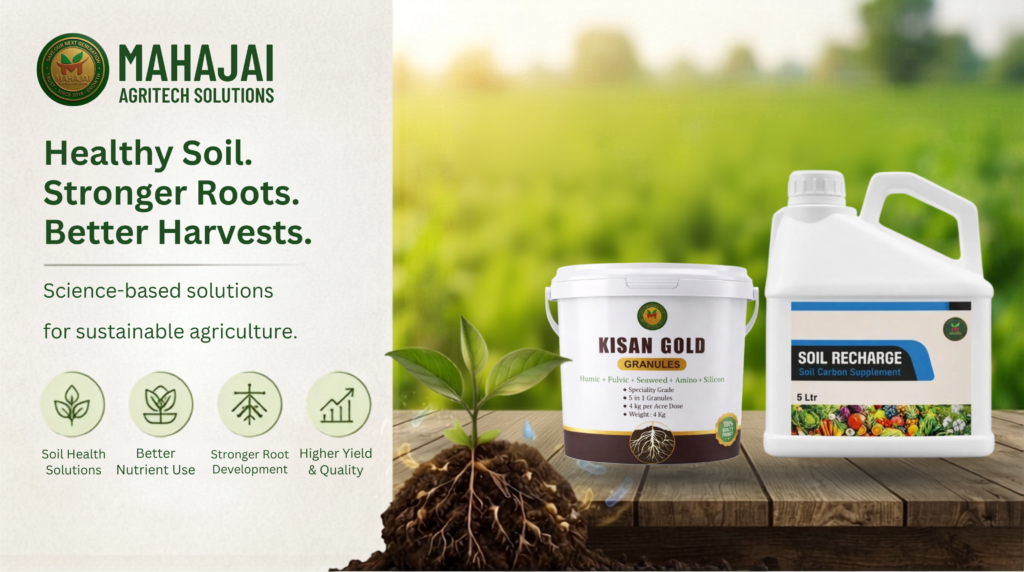
Our range of soil health solutions, including soil bio-enhancers, carbon-based soil conditioners, and mycorrhizal products, is designed to support beneficial microbial activity, strengthen root development, and improve nutrient-use efficiency. By focusing on soil biology, we aim to help Indian farmers build healthier fields and achieve more sustainable crop production.
The Future of Indian Agriculture
The future of farming is not only about increasing fertilizer use—it is about improving soil health. As awareness about sustainable agriculture grows, more farmers are understanding the importance of protecting the living organisms beneath their fields.
Healthy soil microbes help create stronger crops, better nutrient use, improved soil fertility, and greater resilience against changing weather conditions. Taking care of the soil today means securing better harvests for tomorrow.
Conclusion
The real strength of a farm lies beneath the surface. Soil microbes may be invisible, but their impact on crop production is enormous. By maintaining healthy soil biology and adopting better soil management practices, Indian farmers can improve productivity while protecting their land for future generations.
The future of agriculture depends not only on what we add to the soil, but on how well we protect the invisible world already living within it
The real heroes of agriculture live beneath our feet