
How can a traditional farm waste product become a useful agricultural resource?
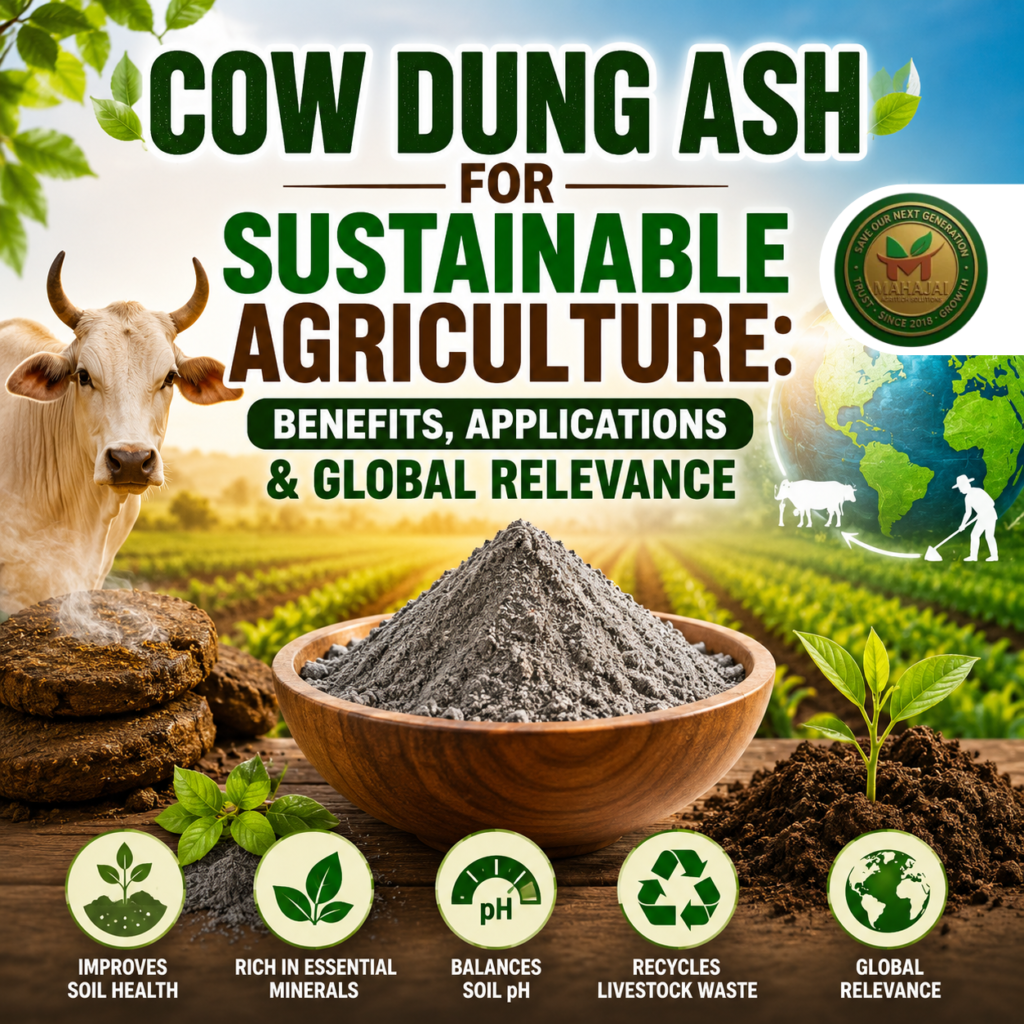
Cow dung ash is a valuable agricultural resource. cow dung ash benefits include : improving soil fertility, providing calcium and potassium. For generations, farmers have found ways to make the most of what their livestock provides. Cow dung, in particular, has long been used in traditional farming practices. Today, as farmers and the agricultural sector look for more sustainable and affordable alternatives to synthetic inputs, cow dung ash in agriculture is receiving growing attention. What was once seen simply as farm waste may have useful agricultural value when used carefully. Its potential role in soil health, nutrient recycling, and circular agriculture makes cow dung ash an interesting resource not only in India but also in sustainable farming practices around the world.
What is Cow Dung Ash?
Cow dung ash is the fine, powdery residue left after dried cow dung cakes are completely burned. Although it comes from the same source as cow dung manure, its properties are quite different.
To understand the difference, think of these common cattle-based inputs:
- Fresh cow dung: It contains organic matter, nitrogen, and microorganisms. However, using fresh dung directly around plants may not always be suitable and can cause problems when applied in excess.
- Compost: Cow dung and other organic materials are allowed to decompose over time, producing a more stable material containing organic matter and nutrients.
- Biochar: It is made by heating organic material under limited oxygen through a process called pyrolysis. Unlike ash, biochar retains a significant amount of carbon.
- Cow dung ash: When dried dung is completely burned, most of its organic carbon and nitrogen are lost. What remains is mainly a mineral-rich ash containing inorganic nutrients and minerals.
It is also important to remember that cow dung ash does not have one fixed composition. Its mineral content can change depending on factors such as the animal’s diet, the type of dung used, and the temperature and conditions during burning. This variation is one reason why its use in agriculture should be based on the quality of the ash and the needs of the soil.
What Does Cow Dung Ash Contain?
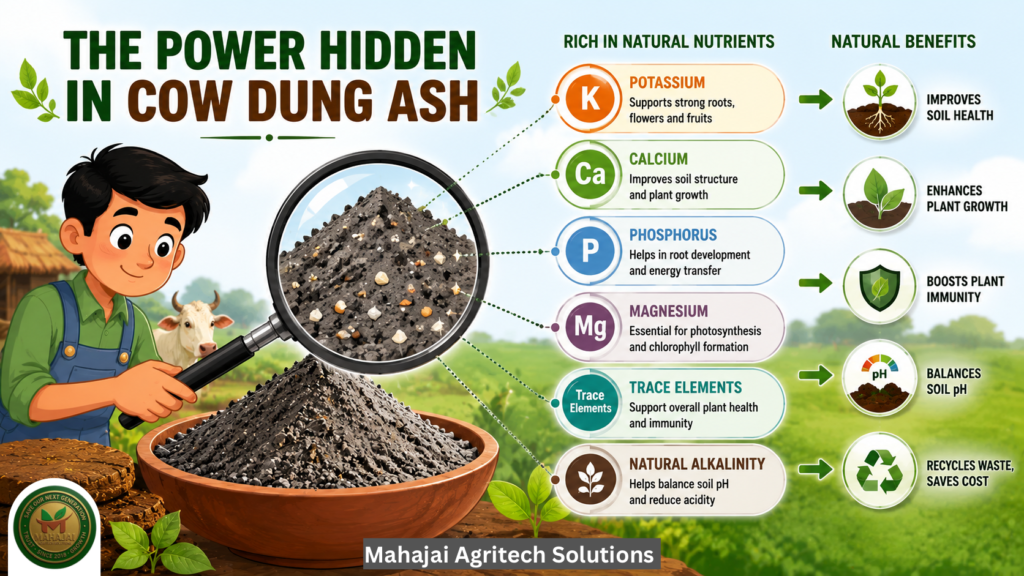
Cow dung ash may contain:
- Calcium: Can help support plant cell structure and may help reduce soil acidity.
- Potassium: An important nutrient involved in water regulation, plant growth, flowering, and fruit development.
- Phosphorus: Plays an important role in root growth and energy-related processes within plants.
- Magnesium and Silica: Magnesium is essential for chlorophyll and photosynthesis, while silica can contribute to plant strength and stress tolerance.
- Trace minerals: Depending on the source, cow dung ash may also contain small amounts of minerals such as iron, zinc, and manganese, which plants require in smaller quantities.
Benefits of Cow Dung Ash in Agriculture
When used carefully and in the right conditions, cow dung ash can offer some useful benefits for agricultural soils. Its value mainly comes from its mineral content and its alkaline nature.
- Helps Manage Soil Acidity: Cow dung ash is generally alkaline, so it can help raise the pH of acidic soils. In this way, it can work somewhat like a liming material and help bring highly acidic soil closer to a suitable pH range.
- Adds Useful Minerals: Cow dung ash can return minerals such as calcium and potassium to the soil. These nutrients are important for healthy plant growth and development.
- May Improve Nutrient Availability: In acidic soils, some nutrients may become less available to plants. By helping correct soil acidity, ash may improve the availability of certain nutrients and create a more suitable environment for plant roots.
- Recycles Livestock Waste: Instead of treating cattle dung ash simply as waste, farmers can potentially make use of its mineral content. This supports better resource and waste management on farms.
- Supports Circular Agriculture: Cattle obtain minerals from plants through their feed. After the dung is burned, some of these minerals remain in the ash. Returning them to the soil can be seen as one part of a circular approach to nutrient recycling.
How Can It Be Used in Agriculture?
Cow dung ash can be used in several simple ways:
- Soil amendment: Helps manage soil acidity and adds minerals like calcium and potassium.
- Compost: Small amounts can add minerals to compost.
- Nutrient management: Can be combined with organic manure and fertilizers as part of balanced nutrient management.
- Seed storage: Traditionally used to reduce moisture and help protect stored seeds from some pests.
- Plant spray: Ash-water solutions are sometimes used traditionally on plants, but they should be used carefully to avoid leaf damage.
The best use depends on the soil, crop, ash quality, and application rate.
Indian Perspective 🇮🇳
India has a large livestock population, making cattle waste an important agricultural resource.
- Livestock population: India had around 192.49 million cattle according to the 2019 Livestock Census.
- Dung generation: India’s bovine population is estimated to produce around 629.91 million tonnes of dung every year.
- Traditional use: For generations, dried cow dung cakes have been used as cooking fuel in rural areas, leaving behind ash.
- Current challenge: Soil degradation and the rising cost of farm inputs are important concerns for Indian farmers.
- Circular agriculture: Properly using cow dung ash can help recycle minerals, manage livestock waste, and support more sustainable farming practices.

What Research Reveals About Cow Dung Ash
Traditional use of cow dung ash is now being studied scientifically as well. Research from India and other countries suggests that it may have useful agricultural applications, but the results depend on the crop, soil, ash quality, and application rate.
1. Foliar Spray on Maize – India
A study in Maharashtra tested cow dung ash solutions on maize. A 4–5% solution showed improvements in plant growth and leaf colour and also showed some pest-deterrent potential. However, higher concentrations were less effective and could cause leaf or plant damage.
2. Soil Microbial Health – Nigeria
Research on acidic, degraded soils found that cow dung ash increased the population of some beneficial soil bacteria and fungi compared with untreated soil. However, composted cow dung performed better for long-term microbial growth.
3. Soil Fertility – India
A study in Gujarat examined ash produced from a cow-dung-based traditional ritual. Moderate application increased soil pH, available phosphorus and potassium, along with some beneficial microbial activity. However, excessive application made the soil too alkaline and reduced the availability of some micronutrients.
4. Seed Storage – India
Research from Tamil Nadu found that mixing ash with seeds of bottle gourd, snake gourd, and pumpkin helped reduce insect damage and maintain seed viability for up to 12 months. However, ash could not stop the natural decline in seed viability during very long storage.
Conclusion:-for more information on agriculture research visit ICAR(https://icar.org.in)
Cow dung ash is more than just a leftover from burning cow dung. With proper testing and careful use, it may help recycle nutrients, manage soil acidity, and support sustainable agriculture. However, its benefits depend on soil type, crop needs, ash quality, and application rate. More research can help unlock its full potential in modern farming.
“When farm waste returns to the soil as a resource, sustainability begins at the roots.”