
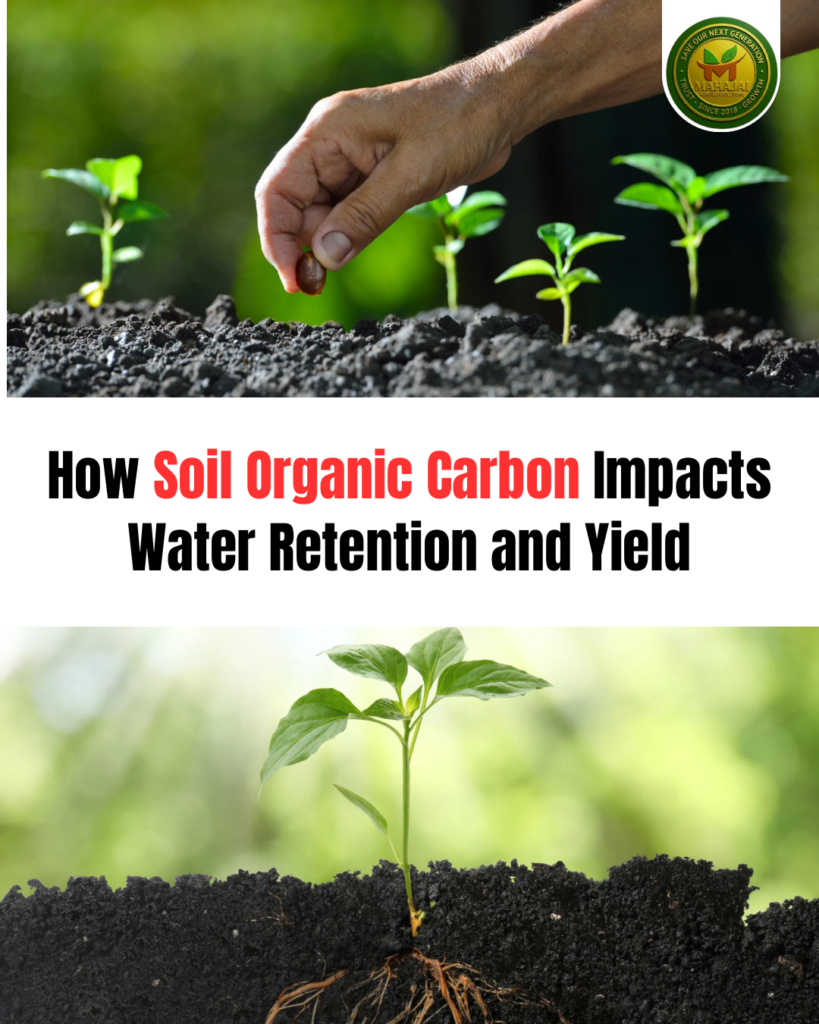
Every farmer has experienced it. The same field that once produced excellent yields now needs more fertilizer, more irrigation, and still struggles to perform. The problem often isn’t just the crop – it’s the soil.
One of the biggest reasons behind this decline is the loss of Soil Organic Carbon (SOC), a key indicator of soil health. According to the Indian Council of Agricultural Research (ICAR), a large proportion of India’s cultivated soils have low organic carbon levels (below 0.5%), reducing their ability to retain water and supply nutrients efficiently. As climate change brings irregular rainfall and rising temperatures, rebuilding Soil Organic Carbon is becoming essential for sustainable farming.
Soil Organic Carbon: The Hidden Strength of Healthy Soil
Soil Organic Carbon comes from decomposed crop residues, roots, animal manure, and microorganisms. Although it makes up only a small part of the soil, it has a huge impact on how the soil functions.
Think of it as the foundation of a house. If the foundation is weak, nothing built on top of it can perform at its best.
How SOC Helps Soil Hold More Water
One of the greatest benefits of Soil Organic Carbon is its ability to improve water retention. Organic matter works like a sponge, absorbing rainwater and storing it for crops to use later.
Studies have shown that even a small increase in soil organic matter can significantly improve the soil’s water-holding capacity. Better soil structure also allows rainwater to soak into the ground instead of running off, reducing erosion and making more moisture available to crops during dry periods.
For Indian farmers who depend heavily on the monsoon, this extra moisture can make a real difference.
Climate Change Makes Soil Organic Carbon More Important
Climate change is bringing erratic rainfall, rising temperatures, and more frequent droughts across India. In these conditions, soils with higher Soil Organic Carbon (SOC) perform better by storing more water, reducing erosion, and helping crops withstand weather stress. Building SOC is not just about improving soil health—it’s one of the most effective ways to make Indian agriculture more resilient to climate change.
Practical Ways Indian Farmers Can Increase Soil Organic Carbon
Improving SOC is a gradual process, but consistent management can produce lasting results.
Some proven practices include:
- Returning crop residues to the field
- Applying compost and farmyard manure
- Growing green manure crops
- Using cover crops
- Reducing excessive tillage
- Practicing crop rotation
- Integrating bio-based soil amendments
- Maintaining balanced plant nutrition
Each season of good soil management contributes to long-term soil improvement.
Healthy Soil Means Better Yields
Water is only one part of the story.
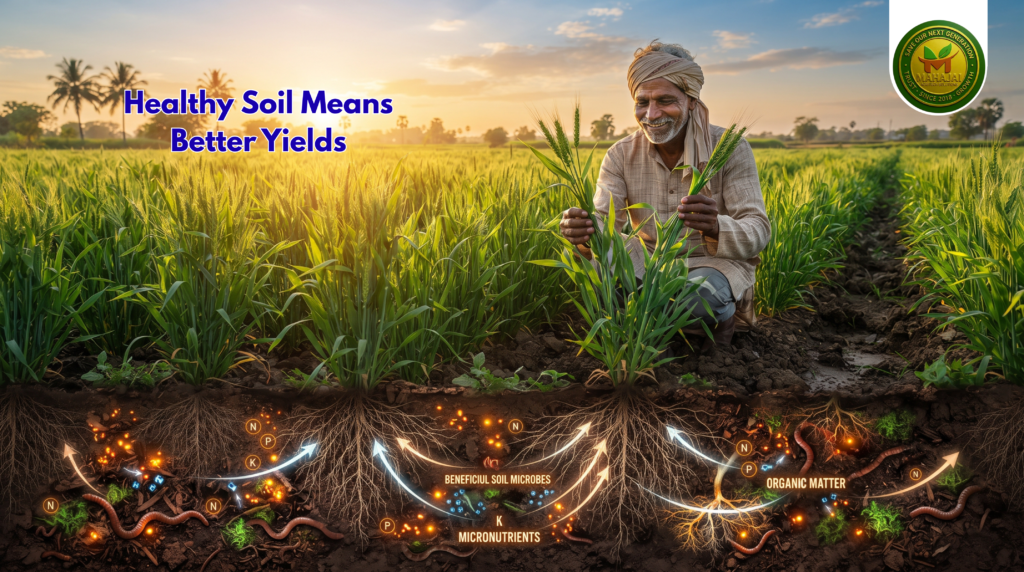
Higher Soil Organic Carbon also supports beneficial soil microorganisms that help convert nutrients into forms plants can easily absorb. It improves root growth, increases nutrient-use efficiency, and helps crops tolerate heat and drought stress.
Research from long-term farming trials has consistently shown that fields with higher organic carbon produce more stable yields, especially under changing weather conditions.
Simply put, when the soil is healthy, the crop performs better.
Building Better Soils Together
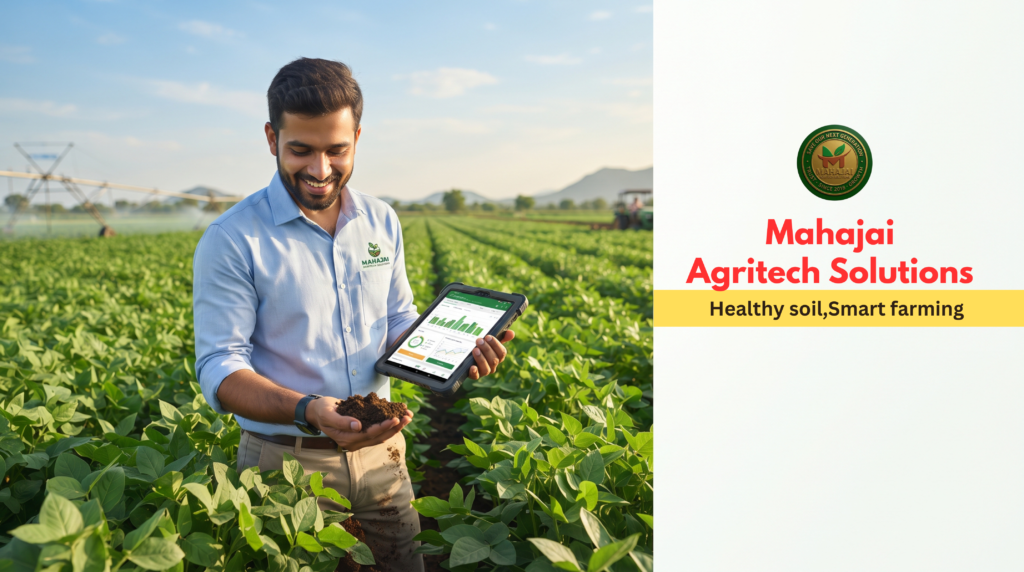
At Mahajai Agritech Solutions, we believe improving soil health is the first step towards improving farm productivity. Since 2018, we have been working with farmers by promoting science-based crop nutrition and soil health management.
Our focus is not just on supplying agricultural inputs but on helping farmers build stronger root systems, improve nutrient efficiency, and support long-term soil productivity. When combined with good farming practices like residue recycling, compost application, and balanced nutrition, these approaches help farmers make better use of water and improve crop performance season after season.
Conclusion
As India works towards sustainable agriculture and climate resilience, improving Soil Organic Carbon should become a priority for every farm. Higher SOC means better water retention, improved nutrient availability, healthier soil biology, and more stable crop yields.
Building soil carbon is an investment in the future—one that benefits farmers, the environment, and food security alike.
Healthy soil isn’t built overnight, but every step taken to increase Soil Organic Carbon brings Indian agriculture closer to a more productive and sustainable future.
“The nation that destroys its soil destroys itself.” – Franklin D. Roosevelt